

On this page
Balinese traditional clothing is more than just a complete outfit. It consists of various garments and accessories, each worn according to the occasion, type of ceremony, and level of religious significance.
From the Balinese kebaya and safari shirt to the kamen and Payas Agung, each piece has its own purpose and meaning. The way these garments are worn can also differ between men and women, particularly during religious ceremonies and traditional events.
What makes Balinese traditional clothing especially interesting is that it remains an important part of everyday cultural life. To this day, you can still see people wearing kebaya, udeng, kamen, and sashes when attending traditional ceremonies or visiting temples.
So, what are the different types of Balinese traditional clothing, and what do they represent? Let’s take a closer look at nine of them!
Types of Balinese Traditional Clothing
Balinese traditional clothing comes in various forms, from main garments to complementary fabrics and accessories. Each is worn according to the occasion, meaning that not every outfit is suitable for every event. Here are nine types of Balinese traditional clothing worth knowing about.
1. Balinese Kebaya

The Balinese kebaya is one of the most common traditional garments worn by Balinese women. It is known for its fitted silhouette, particularly around the waist, and is often made from materials such as brocade or lace.
The kebaya is typically paired with a kamen (traditional cloth wrapped around the lower body) and a sash to complete the outfit. Colors may vary depending on the occasion. Bright colors are commonly worn during joyful ceremonies, such as weddings and odalan (temple anniversary celebrations), while darker colors may be worn during mourning rituals, including ngaben (Balinese cremation ceremonies).
Beyond its role as traditional attire, the Balinese kebaya also reflects the values of modesty and elegance, making it a meaningful part of the way women dress for cultural and religious occasions.
2. Baju Safari

The baju safari is a traditional shirt worn by Balinese men. It resembles a classic button-up shirt, with a collar and buttons down the front. White is a popular choice, especially for religious ceremonies.
The color white is associated with purity and sacredness in Balinese culture. Wearing a white safari shirt is therefore also a way of showing respect and maintaining a neat, modest appearance during traditional and religious occasions.
The baju safari is typically paired with a kamen (traditional wraparound cloth) and an udeng (traditional headcloth). Together, these pieces form a distinctive and easily recognizable outfit for Balinese men.
3. Kamen Cloth

Kamen is a traditional cloth worn around the lower body by both men and women. It is wrapped around the waist and draped down to cover the legs, following traditional dressing customs.
For men, the kamen is typically wrapped from left to right, symbolizing a commitment to dharma, or righteousness. The section of fabric that hangs down toward the ground is known as lelancingan.
This hanging section symbolizes devotion to Ibu Pertiwi, or Mother Earth. As such, the kamen is more than just a garment; it also carries symbolic meaning in Balinese life and tradition.
Read also: Balinese Cultures: Philosophies & Characteristics
4. Saput Poleng

A saput is an outer cloth worn over the kamen. It is commonly used during religious ceremonies, traditional rituals, and special occasions such as weddings.
One well-known variety is the saput poleng, featuring a distinctive black-and-white checkered pattern. The pattern is associated with the Balinese concept of rwabhineda, which recognizes the coexistence of opposing forces, such as good and evil or light and darkness.
Poleng cloth can also be seen wrapped around statues and trees throughout Bali. Its presence is associated with protection and spiritual significance, reflecting beliefs that continue to be valued in local communities.
5. Udeng

The udeng is a traditional headcloth worn by Balinese men. Made from fabric and tied with a distinctive knot at the front, it is one of the most recognizable elements of traditional Balinese male attire.
Plain udengs are commonly worn for religious activities, while patterned versions may be worn in everyday settings. Another style, known as udeng jejateran, is traditionally worn when visiting temples.
Beyond serving as a head covering, the udeng symbolizes self-discipline and self-control. Its distinctive shape serves as a reminder to remain mindful of one's thoughts and conduct throughout daily life.
6. Prada Belt and Sash

Sabuk prada or prada belt is a decorative belt worn by Balinese women over the kamen. In addition to keeping the wraparound cloth securely in place, it adds an elegant finishing touch to the traditional outfit.
Often decorated with intricate patterns in gold or silver tones, the sabuk prada is also associated with the value of self-restraint.
The selendang, also known as senteng in certain traditional contexts, is another important accessory in Balinese women's attire. Worn around the body, it carries symbolic associations with readiness, responsibility, and women's roles within the family.
Read also: Social Classes in Bali Based on the Hindu Caste System
7. Payas Agung

Payas Agung is the most elaborate form of Balinese traditional clothing, reserved for important occasions such as weddings and the metatah (tooth-filing ceremony).
For women, the outfit may include a long tapih (inner wraparound cloth), an angkin prada (decorative chest wrap), a sash, and an elaborate tiered headdress. Men typically wear a kamen, a kampuh (outer wraparound cloth), and other accessories featuring traditional decorative details.
The combination of red, gold, and white gives Payas Agung its striking, luxurious appearance while emphasizing its ceremonial significance. Because of its elaborate design and sacred associations, it is worn for special occasions rather than as everyday attire.
8. Payas Madya

Payas Madya is a more moderate style of Balinese traditional clothing, sitting between Payas Agung and Payas Alit in terms of formality and the level of adornment. The word madya means “middle,” reflecting its less elaborate style compared to Payas Agung.
For men, the upper garment can be more flexible, ranging from a shirt to a polo shirt. However, the kamen and a sash, or senteng, remain essential parts of the outfit.
Payas Madya is suitable for traditional and religious occasions that do not require the full ceremonial attire of Payas Agung. Its simpler, more understated look makes it a practical choice for a variety of cultural events.
Read also: Where to Stay in Bali? Check Out 8 Recommended Places Here!
9. Payas Alit

Payas Alit is the simplest style of Balinese traditional clothing. The word alit means “small,” reflecting the outfit's more modest and minimal level of adornment compared to Payas Agung and Payas Madya.
Women typically wear a kebaya, kamen, and sash, while men may opt for a safari shirt or white shirt paired with a kamen and udeng.
Payas Alit is commonly worn for traditional activities, including customary village meetings and visits to temples. Depending on the occasion, it may also be worn for everyday activities connected to Balinese cultural and religious life.
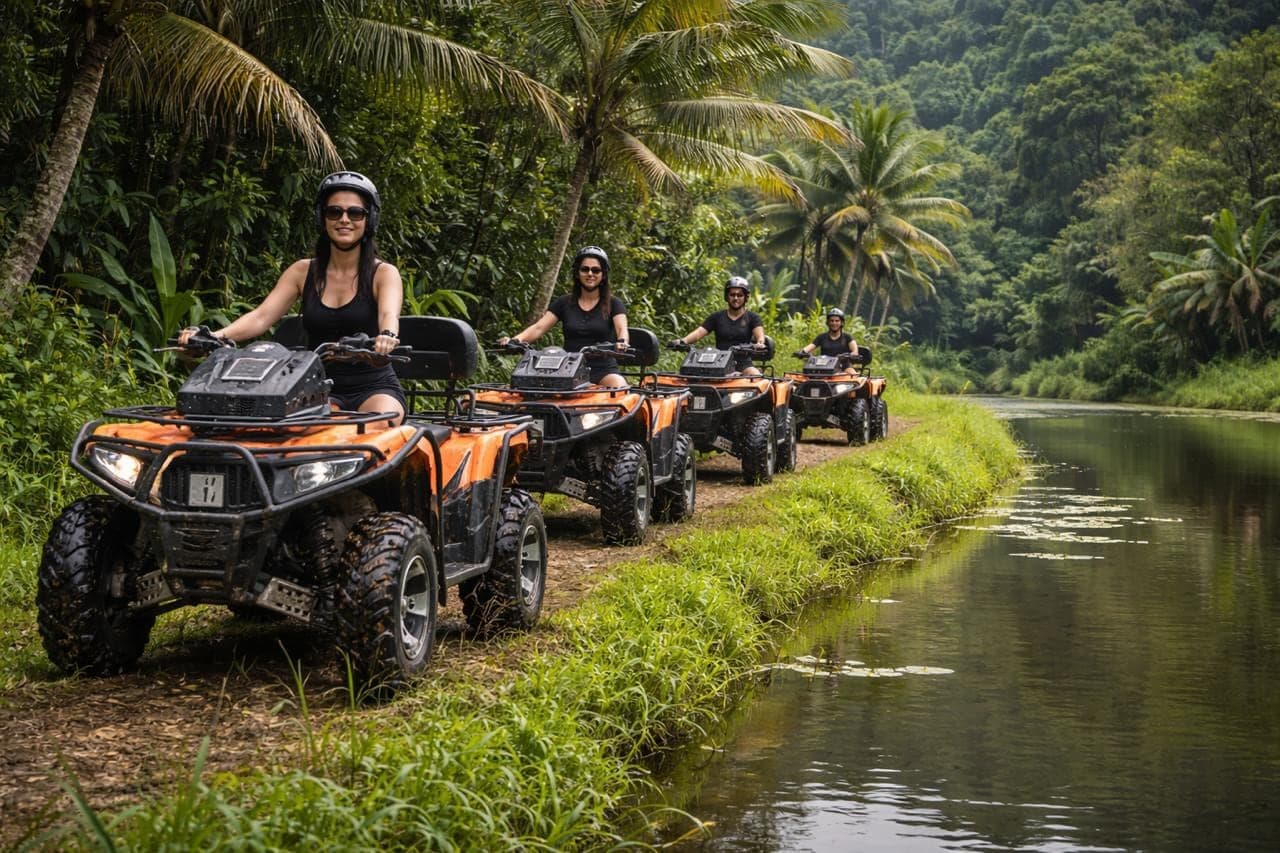
Planning a Trip to Bali? Try ATV Ride with Gosek Adventure!
After learning about Balinese traditional clothing, why not add something different to your Bali itinerary? Exploring the island’s culture offers a glimpse into local life, while outdoor adventures let you experience Bali’s natural beauty up close.
Located in Tampaksiring, Gianyar, Gosek Adventure offers an exciting ATV ride through rice paddies, bamboo forests, rivers, and even a carved stone cave. The cave is one of the highlights of the experience, giving you the thrill of Temple Run ATV, almost like stepping straight into the game itself. You’ll also receive a safety briefing before the ride and be accompanied by a guide along the way.
Never tried an ATV before? No worries! Gosek Adventure provides riding equipment and two options to choose from. Go for the Single Ride if you want to ride solo, or choose the Tandem Ride if you’d rather share an ATV with someone else. Whether you’re riding on your own or bringing a friend along, there’s an option to suit your adventure style.
So, what are you waiting for? Book your ATV ride with Gosek Adventure now and make your Bali getaway even more memorable!
Read also: 10 Places to Visit in Tabanan, from Beaches to Waterfalls