
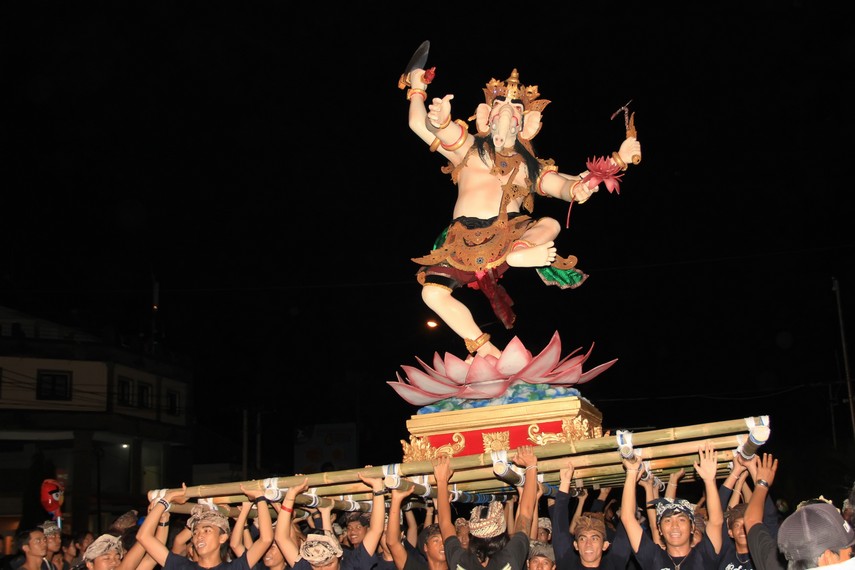
Have you ever seen giant, frightening-looking statues paraded through the streets on the eve of Nyepi Day, accompanied by the powerful rhythms of gamelan music echoing late into the night? These statues are known as “ogoh-ogoh.”
The ogoh-ogoh festival is one of the cultural traditions you can witness at a specific time leading up to Nyepi Day. Villagers, especially the youth, usually gather to showcase their massive artistic creations, works they have spent months crafting with dedication and creativity.
Behind the festive atmosphere, the ogoh-ogoh carries deep philosophical and spiritual meaning, especially for the Balinese community. Let’s explore their history and significance, along with some popular places you can visit to experience the Bali ogoh-ogoh festival.
Ogoh-ogoh are one of Bali’s most iconic cultural symbols, always drawing attention ahead of Nyepi Day. These giant statues, often designed with fierce faces and dramatic forms, are paraded through village streets, accompanied by the dynamic beats of baleganjur gamelan music.
The Bali ogoh-ogoh festival is usually held on the night of Pengerupukan, the day before Nyepi. During this time, local communities—especially village youth groups—proudly present their towering sculptures filled with creativity and artistic expression.
Traditionally, each ogoh-ogoh represents negative traits or harmful energies (bhuta kala) that are believed to be cleansed or neutralized before entering Nyepi, a sacred day devoted to silence, reflection, and self-introspection.
Read also: Ngaben Ceremony: Definition, Types, & Procedures
Ogoh-ogoh have become one of the most iconic traditions associated with Nyepi. In essence, they symbolize bhuta kala, which is negative energies, harmful traits, and uncontrolled desires that exist within humans and the universe.
That’s why ogoh-ogoh are typically designed as frightening or grotesque figures. By parading them around the village on the night of Pengerupukan (the eve of Nyepi), the ritual is believed to represent a spiritual cleansing before entering the sacred Day of Silence.
The procession itself carries deep spiritual meaning. After being paraded, the ogoh-ogoh are usually burned. This act symbolizes the destruction of negative elements, restoring balance between humans, nature, and God.
This ritual also reflects the essence of Tri Hita Karana, the Balinese philosophy of life that emphasizes harmony among people, the environment, and the divine.
Historically, ogoh-ogoh began gaining widespread recognition in the early 1980s, alongside the growth of artistic creativity in Bali. In their early days, they were relatively simple in form, made from basic materials such as bamboo and paper.
Over time, the ogoh-ogoh festival has evolved into an increasingly dynamic space for artistic expression. Village youth groups, known as sekaa teruna, collaborate to create more elaborate and innovative designs, often reflecting contemporary social issues while still preserving their sacred values.
Read also: 20 Best Places to Visit in Bali, Note Down & Don’t Miss It!
After learning about the history and cultural significance of ogoh-ogoh, it’s only natural to feel curious and want to experience the festival firsthand in different parts of Bali.
Here are some of the best locations to witness the most vibrant and memorable ogoh-ogoh parades:
Ground Zero Kuta is often one of the starting points or main routes for ogoh-ogoh parades in the Kuta area, especially along Jalan Legian and Jalan Pantai Kuta.
The atmosphere here is lively, with a mix of locals and tourists gathering to enjoy the parade and the energetic rhythm of the celebrations. It’s a great option if you’re staying in South Bali and want to catch the ogoh-ogoh procession up close.
Patung Catur Muka is another strategic spot in Denpasar where you can watch large-scale ogoh-ogoh parades.
This area is also frequently used as a cultural hub, including events like the Kasanga Festival. Here, you can see hundreds of ogoh-ogoh from different banjar (traditional community groups) showcased and paraded around the main roundabout. It’s truly an impressive sight.
Sanur offers a slightly more relaxed ogoh-ogoh viewing experience while still being vibrant and colorful. The parades usually pass through major intersections, providing wider viewing spaces that are ideal for families or visitors who prefer a festive atmosphere without overwhelming crowds.
You can also head to Ubud to watch the ogoh-ogoh parade. Known for its strong artistic and cultural atmosphere, Ubud often showcases ogoh-ogoh with intricate details and rich storytelling concepts.
The procession typically passes through central Ubud, including major intersections and areas near the Ubud Art Market, making it easily accessible for visitors.
If you’re staying in East Bali, Semarapura in Klungkung is another great place to experience the ogoh-ogoh parade.
The area often features creations by local village youth with strong regional characteristics. As a result, the parade atmosphere here tends to feel more traditional, intimate, and community-centered.
Plaza Renon is one of the favorite gathering spots for Denpasar residents to watch the ogoh-ogoh festival. The area is spacious and open, allowing spectators to enjoy the parade more comfortably.
Several ogoh-ogoh from different banjar frequently gather or pass through this area, making it a strategic location to see a variety of impressive creations in one place.
If you’re staying in a premium resort area, Nusa Dua also offers a memorable ogoh-ogoh viewing experience.
Parades in this area are usually more orderly and tourist-friendly. The surroundings are clean and well-equipped with facilities, making it a convenient and comfortable option for visitors.
That concludes our overview of the Bali ogoh-ogoh festival—from its history and cultural significance to some of the best places you can visit to watch the parades before Nyepi Day begins.
Beyond watching the ogoh-ogoh procession, there are plenty of other exciting activities you can enjoy in Bali. From soaking in the island’s breathtaking natural scenery to getting your adrenaline pumping with unique outdoor adventures, Bali truly offers something for everyone.
If you’d like to experience both nature and adventure at once, try an ATV ride with Gosek Adventure. This activity lets you explore Bali’s unspoiled landscapes through thrilling off-road tracks, passing through forests, rice fields, rivers, and muddy trails for an unforgettable ride.
Gosek Adventure offers both Single Ride options for solo riders and Tandem Ride packages if you prefer to share the experience with a friend, partner, or family member.
Supported by experienced instructors and reliable safety facilities, Gosek Adventure is a great way to complete your Bali getaway. Book your adventure today and get ready for an exciting ride!
Read also: 10 Fun & Off-the-Beaten-Path Ideas on What to Do in Bali

Author is part of the Gosek Adventure Bali team, dedicated to sharing practical tips, travel inspiration, and insider insights to help you enjoy the best experiences in Bali.