
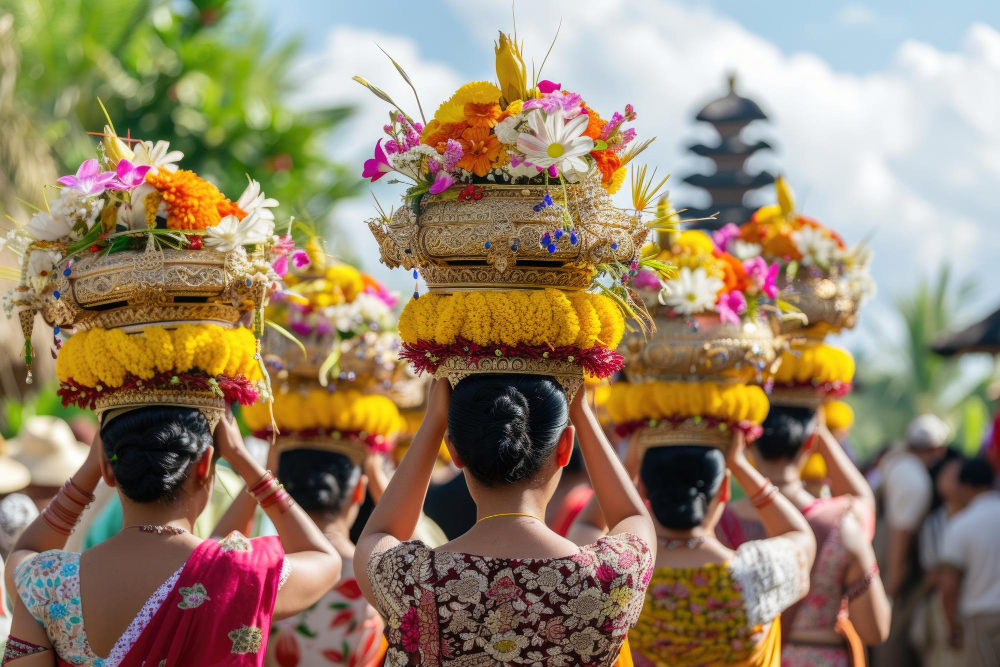
Bali is an island with a million charms, ranging from its captivating natural beauty to the various customs and traditions that have been preserved and passed down through generations by its people.
Not only is it famous for its beaches and tourist destinations, but the Island of the Gods also possesses a rich and deeply meaningful cultural heritage.
This can be seen in the many rituals and traditional Balinese ceremonies that are regularly carried out in daily life.
Interestingly, the various traditional ceremonies in Bali each have their own unique characteristics, philosophies, and sequences of rituals. So, if you are curious about the wide range of Bali traditions rich in history, check out the full review below!
The large number of traditional ceremonies in Bali is closely connected to the strong influence of culture, Hindu teachings, and enduring Bali traditions in the daily lives of the local people.
For the Balinese community, these rituals are not merely ceremonial traditions, but also an essential part of maintaining harmony between humans, nature, and the Creator.
This concept is known as the philosophy of Tri Hita Karana, which means the three causes of harmony in life: the relationship between humans and God, fellow humans, and the surrounding environment.
This philosophy continues to be practiced today and serves as the foundation for many traditional and religious activities in Bali, making Bali traditions deeply rooted in everyday life.
It is no surprise that almost every stage of life in Balinese society has its own traditional procession, from birth and marriage to funeral ceremonies.
In addition, there are also various rituals and traditional ceremonies held on certain days according to the Balinese calendar as expressions of gratitude, respect for ancestors, and prayers for safety and prosperity.
Read also: 12 Most Beautiful & Best Beaches in Bali, Take Notes!
From self-purification rituals and religious celebrations to ceremonies honoring ancestors, every tradition and cultural ritual in Bali carries its own meaning and purpose. These unique Bali traditions reflect the island’s deep spiritual and cultural heritage.
Here are some famous Bali traditions and traditional ceremonies you should know, along with their origins and processions:
Ngaben is one of the most well-known Bali traditions recognized internationally. This ritual is a cremation ceremony in Balinese Hinduism that symbolizes the release of the soul into the next life.
Usually, the family holds a funeral procession featuring a bade (funeral tower) and lembu (bull sarcophagus) before the cremation takes place. Beyond its spiritual significance, Ngaben also represents the family’s final tribute to their ancestors.
Before Nyepi Day, Balinese Hindus commonly perform the Melasti Ceremony by walking to the sea, lakes, or sacred water sources.
During this procession, sacred temple objects and symbols are carried for purification. Melasti is believed to cleanse both the individual and the universe from negative energy before entering the Saka New Year, making it one of the most meaningful Bali traditions.
This tooth-filing tradition is performed when a person enters adulthood. In Balinese belief, filing the upper teeth symbolizes a person’s effort to control negative traits such as anger, jealousy, and greed.
For this reason, the Mepandes ritual is considered not only a cultural ceremony but also an important part of personal maturity and self-development within Bali traditions.
Galungan celebrates the victory of dharma (goodness) over adharma (evil). During the celebration, Bali becomes more festive with the presence of penjor, beautifully decorated bamboo poles placed in front of homes.
This religious holiday is also a special time for Hindu families to gather together and pray at temples, highlighting the strong communal values found in Bali traditions.
Omed-Omedan is a unique tradition originating from Sesetan Village in Denpasar. This ritual is usually held after Nyepi and involves young men and women playfully pulling each other together in front of cheering crowds.
Although often referred to as the “kissing festival,” this tradition actually symbolizes strengthening social bonds and maintaining harmony within the community, which is an important aspect of Bali traditions.
Read also: Ogoh-Ogoh Festival During Nyepi: History & Popular Spots
In addition to purifying people, Balinese society also has special rituals for objects considered important in daily life.
Tumpek Landep is usually dedicated to heirloom weapons, vehicles, and even modern work equipment. This ceremony symbolizes gratitude and serves as a reminder for people to use technology and intelligence wisely.
Mekare-Kare, also known as the pandan war, is a unique tradition from Tenganan Village that is both extreme and fascinating to tourists.
In this ritual, men fight each other using thorny pandan leaves and rattan shields. Although it may appear harsh, the tradition is performed as a form of respect to Lord Indra and symbolizes the bravery of the Bali Aga community.
Saraswati Day is closely associated with honoring knowledge, art, and wisdom. On this day, Hindus in Bali usually pray at schools, libraries, and other places of learning.
Books and educational tools are also blessed as a symbol of respect for Goddess Saraswati, who is believed to be the goddess of knowledge. This celebration highlights the spiritual value of education within Bali traditions.
Unlike many solemn rituals, Mesuryak is lively and full of excitement. This tradition, originating from Tabanan Regency, is performed during Kuningan Day by throwing money into the air as a symbolic offering for ancestors.
The ceremony is usually filled with laughter and enthusiasm as families gather together to celebrate.
For Balinese people, a person’s birthday holds deep spiritual meaning. Therefore, there is an Otonan ceremony held every six months according to the Balinese calendar.
This ritual serves as a prayer and expression of gratitude for growing older, while also asking for protection and safety throughout life. Otonan remains an essential part of personal and family-related Bali traditions.
After learning about the many unique rituals and Bali traditions, your vacation will feel even more complete if you also explore the adventurous side of the Island of the Gods.
Bali not only offers rich cultural tourism and breathtaking natural scenery, but also a wide variety of exciting activities perfect for families, couples, and friends.
One activity you should definitely try is an ATV Ride with Gosek Adventure, which offers the thrilling experience of exploring Bali’s nature through extreme tracks, rice fields, forests, rivers, and muddy trails that will get your adrenaline pumping.
At Gosek Adventure, you can choose between different ATV Ride options based on your comfort and preferences: Single Ride (to ride the ATV by yourself) and Tandem Ride (to enjoy the ATV experience with a friend or partner).
So, what are you waiting for? Visit Bali to experience its rich history, fascinating Bali traditions, and exciting adventures like ATV riding. For reservations, contact us here!
Read also: 7 Indoor Activities in Bali Perfect for the Bali Rainy Season

Author is part of the Gosek Adventure Bali team, dedicated to sharing practical tips, travel inspiration, and insider insights to help you enjoy the best experiences in Bali.